Product Description
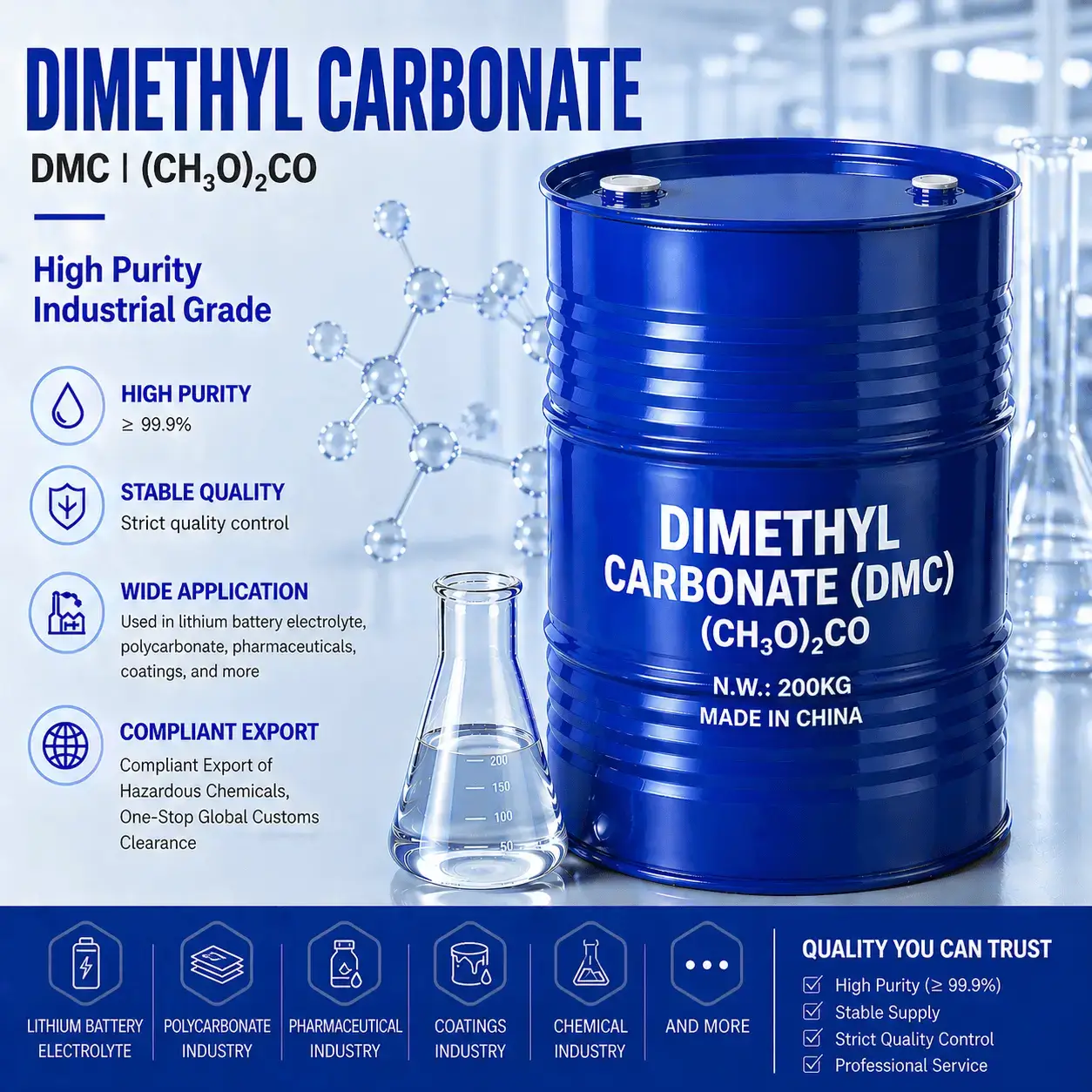
Dimethyl carbonate (DMC) is a low-toxicity, environmentally friendly, high-value-added green chemical raw material that combines excellent solubility with chemical reactivity; its molecular structure contains methyl, methoxy, and carbonyl functional groups. It can replace traditional high-VOC solvents such as toluene, xylene, and acetate esters, and is widely used in coatings, inks, adhesives, lithium-ion battery electrolytes, pharmaceutical and pesticide intermediates, and organic synthesis. It is hailed as the “new building block of organic synthesis in the 21st century.”
For detailed information on the physical and chemical properties of DMC, see 【Addition information】
Main Applications & Product Features
1. Lithium-ion Battery Electrolyte
• High-purity DMC is one of the key solvents in lithium-ion battery electrolytes
• When used in combination with ethylene carbonate (EC), it forms a stable SEI film
2.Organic Synthesis Intermediates
• Methylation reagents: Replacements for highly toxic chemicals such as phosgene and dimethyl sulfate
• Carbonylation reagents: Key raw materials for the synthesis of polycarbonates and isocyanates
• Pesticide and pharmaceutical intermediates: Used in the synthesis of various pesticides and pharmaceutical products
3. Green Solvents
• Coatings and paints: Replaces harmful solvents such as benzene, xylene, and acetone
• Cleaners: Industrial cleaners, cleaning of electronic components
• Adhesives: Replaces traditional organic solvents, reducing VOC emissions
4.Fuel Additive
• Research Octane Number (RON) as high as 105–110, improving anti-knock performance
• High oxygen content (53%), reducing CO and HC emissions in exhaust gases
• Biodegradable, does not contaminate groundwater
GHS Hazard Classification
| Category | Information |
| Flammable liquids | Category 2 |
| Reproductive toxicity | Category 2 |
| Specific target organ toxicity—single exposure | Category 3 |
| Hazard statement | Danger |
Hazard Statement
H225: Highly flammable liquid and vapor
H361: Suspected of damaging fertility or the unborn child
H336: May cause drowsiness or dizziness
Shipping Information
| Category | Information |
| UN Number | 1161 |
| Proper Shipping Name | Dimethyl carbonate |
| Hazard Class | Class 3 (Flammable Liquids) |
| Packaging Group | Ⅱ |
| HS Code | 2920.29 |
Packaging Specifications
| Packaging Type | Specification |
| Steel drum | 200 kg |
| IBC Tote | 1000 kg / IBC |
| ISO Tank | 22-24 MT |
| Small Package | customizable |
Storage Requirements
• Store in a cool, dry, well-ventilated, non-combustible warehouse
• Warehouse temperature should not exceed 37°C; maintain a low temperature
• Keep away from heat sources, sparks, open flames, and hot surfaces
• Keep container tightly closed
• Store separately from oxidizers, reducing agents, acids, etc.; do not store together
• The warehouse must be equipped with lightning protection devices
• Use explosion-proof lighting and ventilation equipment
• Do not use equipment or tools that may generate sparks
Safety Precautions
• Respiratory protection: Wear an appropriate respirator designed for organic vapors or a positive-pressure respirator
• Eye protection: Chemical-resistant safety goggles or a face shield
• Hand protection: Anti-static chemical-resistant gloves (nitrile, neoprene)
• Body protection: Wear chemical-resistant work clothing and anti-static work shoes
Disclaimer
- Carefully read and follow the latest SDS provided with the product;
- Conduct a risk assessment according to actual use and local regulations;
- Implement appropriate safety measures and comply with all applicable hazardous chemical regulations.
We assume no liability for any direct or indirect loss, damage, or injury arising from the use or handling of this product. Users bear full responsibility and risk for its use.