Product Description
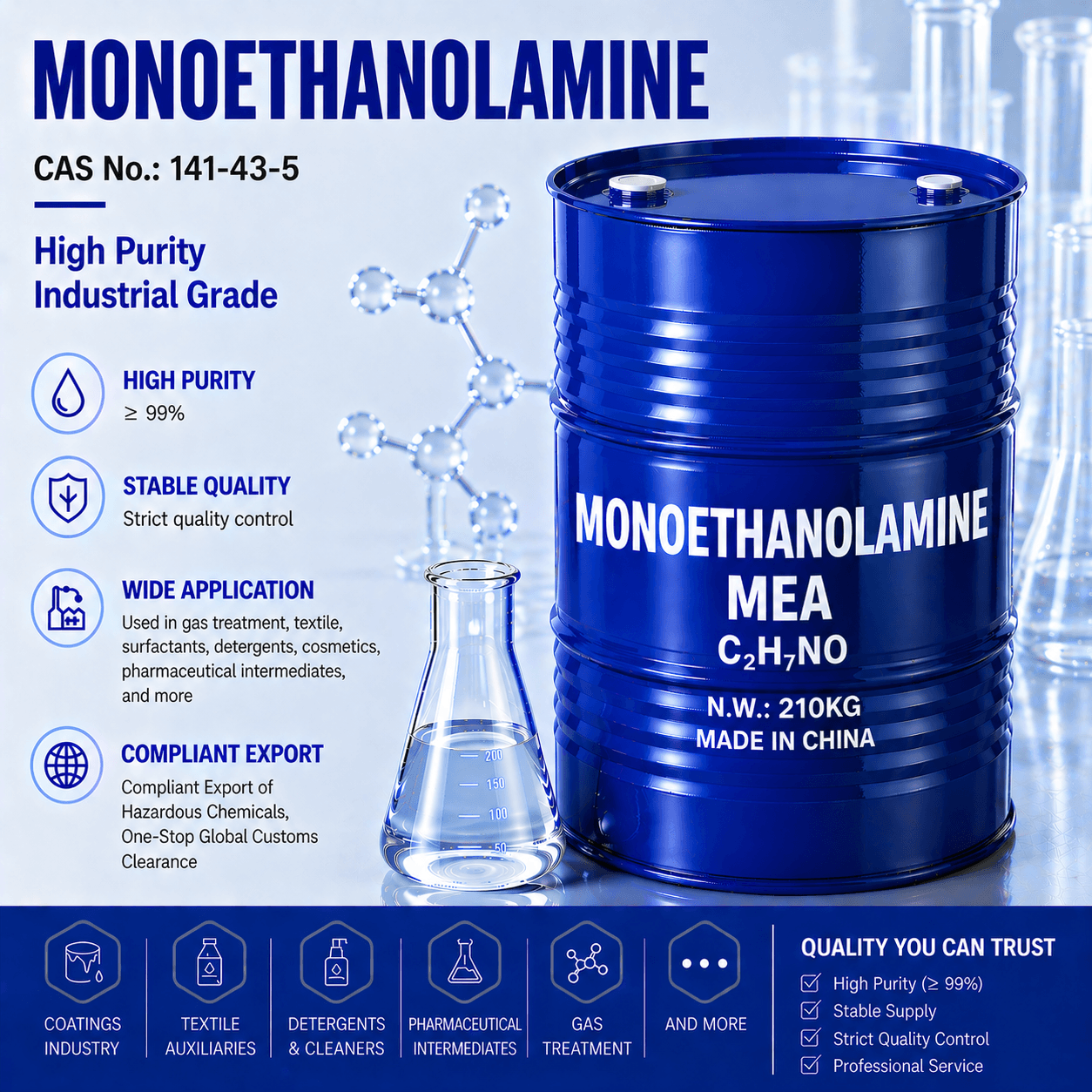
Monoethanolamine (MEA), also known as 2-aminoethanol or 2-hydroxyethylamine, belongs to the ethanolamine series. The molecule contains both primary amino (-NH₂) and hydroxyl (-OH) functional groups, combining the strong basicity of aliphatic primary amines with the hydrophilicity of alcohols. It is widely used in flue gas desulfurization and decarbonization, gas purification, surfactants, household and personal care detergents, textile auxiliaries, rubber processing, water treatment, and organic synthesis.
For detailed information on the physical and chemical properties of MEA, see 【Addition information】
Main Applications
1. Gas Desulfurization and Purification
• Used for removing CO₂ and H₂S from flue gas in power plants and chemical plants, as well as for desulfurization and decarbonization of natural gas and coal chemical gases.
2.Surfactants
• Synthesis of nonionic and anionic surfactants, used as raw materials for detergents, personal care products, and emulsifiers.
3. Textile and Dyeing Industry
• Used as textile auxiliaries, softeners, leveling agents, and pH adjusters to improve fabric hand feel and dyeing results.
4.Water Treatment Industry
• Used as water quality stabilizers, corrosion inhibitors, and neutralizing agents for corrosion and scale prevention in recirculating water systems.
5.Rubber and Coatings
• Rubber vulcanization accelerators, neutralizing agents for coating resins, and raw materials for solvents and curing agents.
6.Organic Synthesis
• Used as synthetic intermediates in fine chemicals for pharmaceuticals, pesticides, leather chemicals, and cement admixtures.
GHS Hazard Classification
| Category | Information |
| Flammable liquids | Category 4 |
| Acute toxicity—oral | Category 4 |
| Acute toxicity—dermal | Category 4 |
| Acute toxicity—inhalation (vapors) | Category 3/4 |
| Skin corrosion/irritation | Category 1B |
| Serious eye injury/eye irritation | Category 1 |
| Specific target organ toxicity—single exposure | Category 3 |
| Hazards to the aquatic environment—chronic toxicity | Category 3 |
| Hazard statement | Danger |
Hazard Statement
H226/H227: Flammable liquid and vapor / Flammable liquid
H302: Harmful if swallowed
H312: Harmful in contact with skin
H314: Causes severe skin burns and eye damage
H318: Causes serious eye damage
H331: Toxic if inhaled (vapors)
H332: Harmful if inhaled
H335: May cause respiratory irritation
H412: Harmful to aquatic life with long-lasting effects
Shipping Information
| Category | Information |
| UN Number | 2491 |
| Proper Shipping Name | Ethanolamine / Monoethanolamine |
| Hazard Class | Class 8 (Corrosive substances) |
| Packaging Group | Ⅱ |
| HS Code | 2922.11 |
Packaging Specifications
| Packaging Type | Specification |
| Galvanized steel drum | 210 kg |
| IBC Tote | 1000 kg / IBC |
| ISO Tank | 20 MT |
| Small Package | customizable |
Storage Requirements
• Store in a cool, dry, and well-ventilated warehouse
• Warehouse temperature should not exceed 35°C
• Keep away from sources of fire, heat, strong oxidizing agents, strong acids, and halogenated hydrocarbons
• Prevent moisture absorption; containers must be sealed
• Take precautions against low temperatures (melting point 10.5°C; solidifies below this temperature)
• Recommended container materials: carbon steel, stainless steel, HDPE plastic drums
• Store separately from food, pharmaceuticals, and flammable materials
Safety Precaution
• Respiratory protection: Use in a well-ventilated area; wear appropriate respiratory protection when necessary
• Hand protection: Wear chemical-resistant gloves (e.g., nitrile or neoprene)
• Eye protection: Wear safety goggles or a face shield
• Body protection: Wear acid- and alkali-resistant protective clothing
• The workplace should be equipped with an eyewash station and safety shower facilities
Disclaimer
This product information is for reference only and does not constitute any warranty, guarantee, or legal advice. Before using DMF, users must:
- Carefully read and follow the latest SDS provided with the product;
- Conduct a risk assessment according to actual use and local regulations;
- Implement appropriate safety measures and comply with all applicable hazardous chemical regulations.
We assume no liability for any direct or indirect loss, damage, or injury arising from the use or handling of this product. Users bear full responsibility and risk for its use.