Product Description
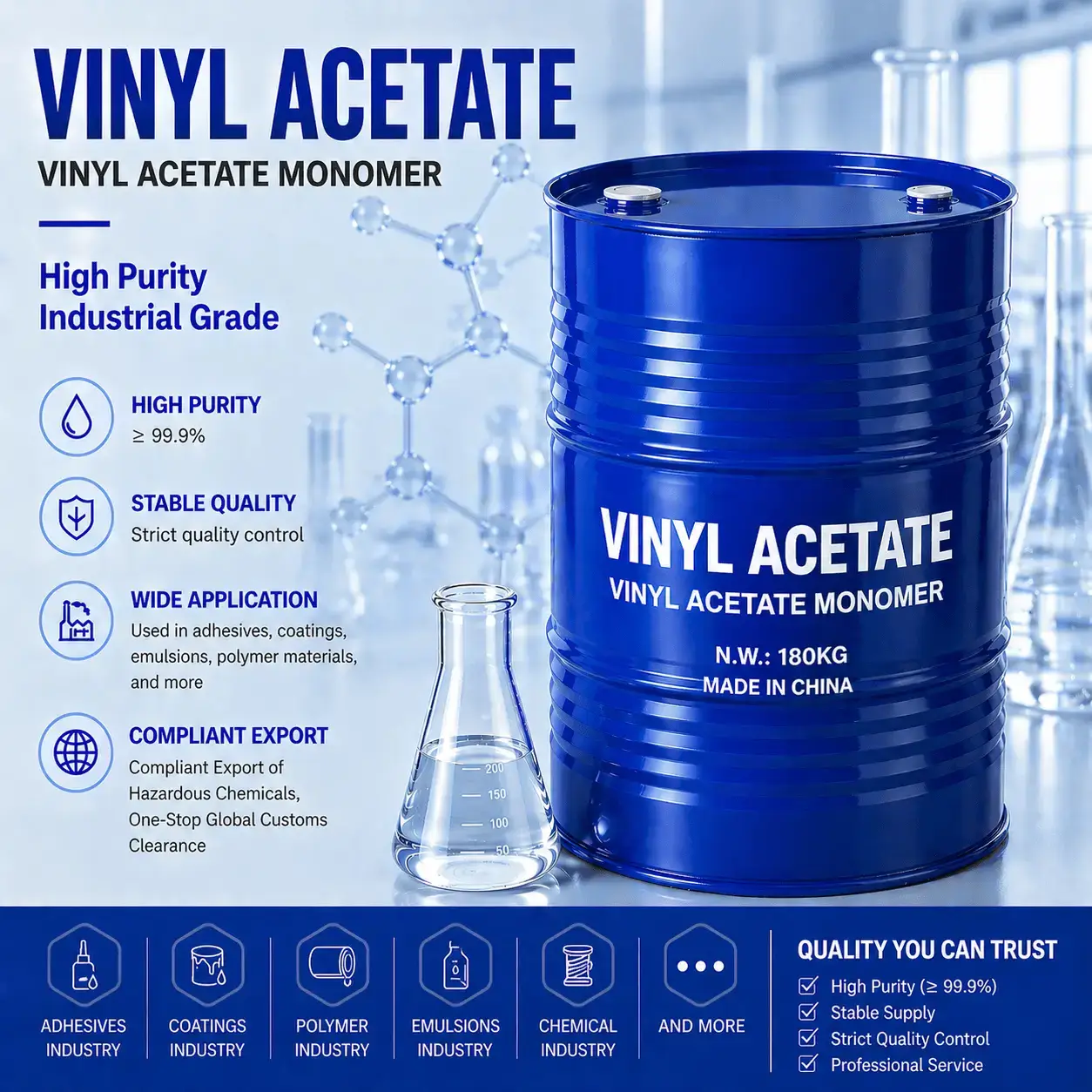
Vinyl acetate , also known as ethyl acetate or vinyl acetate, is an important organic chemical raw material and synthetic monomer. Vinyl acetate is a colorless, transparent, flammable liquid with a fruity odor. It is a key monomer in the production of polymeric materials such as polyvinyl acetate (PVAc), polyvinyl alcohol (PVA), and ethylene-vinyl acetate copolymer (EVA). Vinyl acetate is primarily produced through the gas-phase oxidation reaction of ethylene and acetic acid in the presence of a palladium catalyst. Because it contains a reactive vinyl double bond, vinyl acetate readily undergoes polymerization under the influence of heat, light, or trace amounts of peroxides; therefore, commercial products typically contain polymerization inhibitors such as hydroquinone (HQ) to ensure storage stability.
For detailed information on the physical and chemical properties of Vinyl acetate, see 【Addition information】
Main Applications & Product Features
1.Product Features
• High purity, low impurities, and stable polymerization activity
• Excellent self-polymerization and copolymerization properties, suitable for a wide range of polymerization processes
2.Main Applications
• Polyvinyl acetate: Adhesives (for bonding wood, paper, and fabric)
• Polyvinyl alcohol: Textile sizing, adhesives, films
• Ethylene-vinyl acetate copolymer: Hot-melt adhesives, cable compounds, solar cell encapsulation
• Paints & Coatings: Architectural coatings, wood finishes, paper coatings
• Building materials: Cement additives, flooring materials, sealants
• Packaging materials: Food packaging films, laminating adhesives
• Textile Industry: Fiber sizing and dyeing auxiliaries
• Other Applications: Chewing gum bases, tablet coatings, cultural heritage conservation
GHS Hazard Classification
| Category | Information |
| Flammable liquids | Category 2 |
| Acute Toxicity—Inhalation | Category 4 |
| Skin irritation | Category 3 |
| Serious eye injury/eye irritation | Category 2A |
| Skin sensitization | Category 1 |
| Germline mutagenicity | Category 2 |
| carcinogenicity | Category 2 |
| Specific target organ toxicity—single exposure | Category 3 |
| Hazards to the aquatic environment—chronic toxicity | Category 3 |
Hazard Statement
H225: Highly flammable liquid and vapor
H332: Harmful if inhaled
H319: Causes serious eye irritation
H335:May cause respiratory irritation
H317: May cause an allergic skin reaction
H341: Suspected of causing genetic defects
H351: Suspected of causing cancer
H412: Harmful to aquatic life with long-lasting effects
Shipping Information
| Category | Information |
| UN Number | 1301 |
| Proper Shipping Name | Vinyl acetate, stabilized |
| Hazard Class | Class 3 (Flammable Liquids) |
| Packaging Group | II |
| HS Code | 2915.39 |
Packaging Specifications
| Packaging Type | Specification |
| Standard steel drums/iron drums | 180 kg |
| IBC Tote | 1000 kg / IBC |
| ISO Tank | 20 MT |
| Small Package | customizable |
Storage Requirements
• Store in a cool, well-ventilated warehouse.
• Warehouse temperature should not exceed 37°C.
• Keep away from sources of ignition and heat; avoid direct sunlight.
• Store separately from oxidizers, acids, and alkalis.
• Do not use machinery or tools that may generate sparks.
• Use explosion-proof lighting and ventilation equipment.
• Recommended storage temperature: 0–8°C.
Safety Precautions
• Avoid inhalation of dust and vapour.
• Avoid skin and eye contact.
• Wear protective gloves, goggles and respirator.
• Wear chemical protective clothing.
• No smoking, eating or drinking in work area.
• Provide adequate local exhaust and general ventilation.
• Can be absorbed through skin, wash thoroughly after handling.
Disclaimer
- Carefully read and follow the latest SDS provided with the product;
- Conduct a risk assessment according to actual use and local regulations;
- Implement appropriate safety measures and comply with all applicable hazardous chemical regulations.
We assume no liability for any direct or indirect loss, damage, or injury arising from the use or handling of this product. Users bear full responsibility and risk for its use.