Product Description
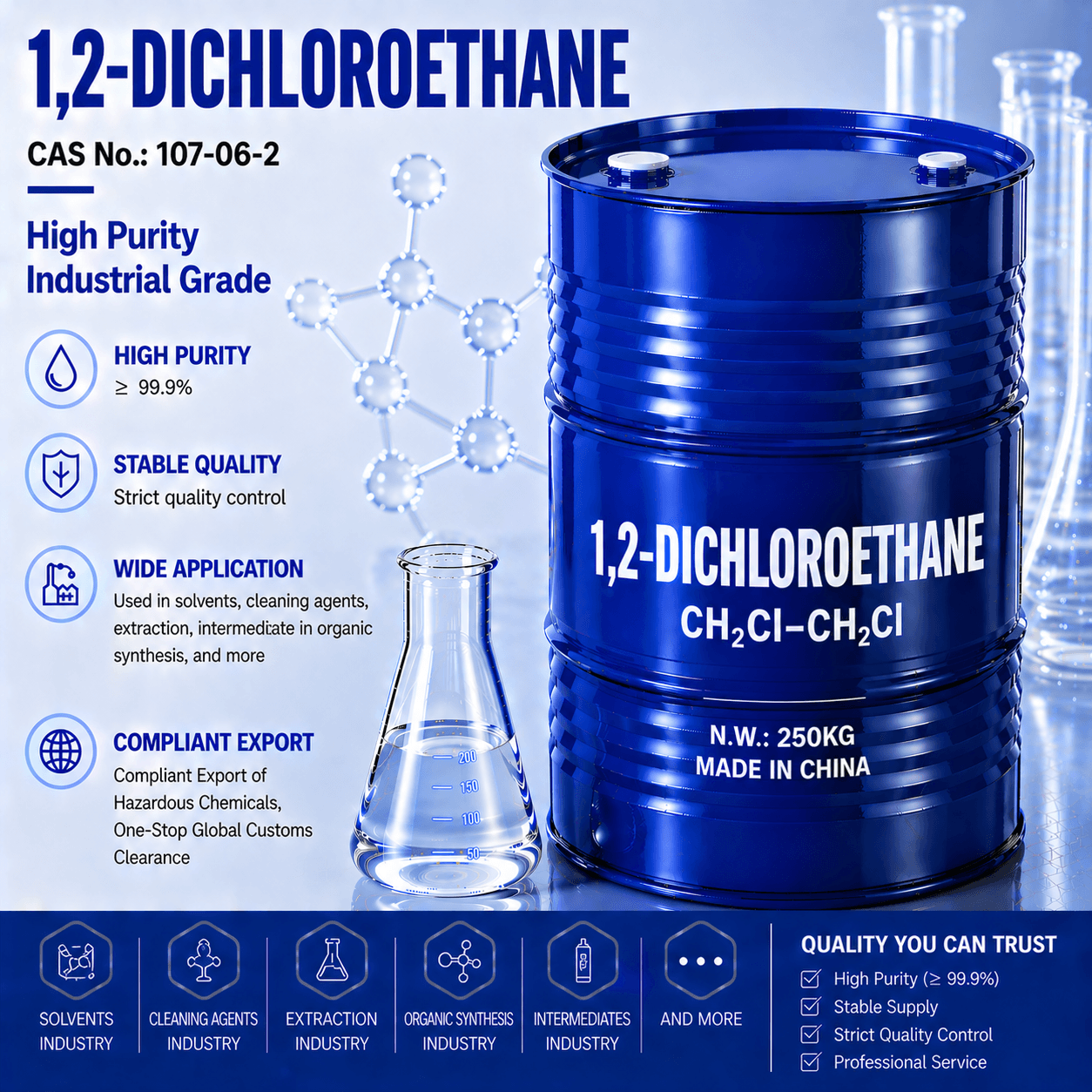
Dichloroethane (1,2-dichloroethane) is an important chlorinated organic compound. At room temperature, it is a colorless, transparent, oily liquid with an odor similar to chloroform; it has a sweet taste and is highly volatile. As a key member of the halogenated hydrocarbon family, dichloroethane is widely used in industries such as pharmaceutical and pesticide intermediates, essential oil extraction, paint stripping, rubber solvents, and metal degreasing and cleaning due to its excellent solubility and chemical stability.
For detailed information on the physical and chemical properties of Dichloroethane, see 【Addition information】
Main Applications
1. PVC Raw Material
• Dichloroethane is a key intermediate in the production of vinyl chloride; it decomposes at high temperatures (500–550°C) to form vinyl chloride and hydrogen chloride. Since vinyl chloride is the sole monomer used in the synthesis of polyvinyl chloride (PVC), dichloroethane serves as a critical upstream feedstock in the PVC industry chain.
2.Industrial Solvent
• Dissolving and diluting rubber, resins, coatings, and inks
• Degreasing and oil removal from metal surfaces
• Cleaning printed circuit boards
• Degreasing in the leather and textile industries
3.Organic Synthesis Intermediate
• Synthesis of ethylene glycol, ethylenediamine, tetrachloroethylene, trichloroethylene, etc.
• Synthesis of pharmaceutical intermediates and active ingredients for pesticides
• Synthesis of dyes and fragrances
4.Extraction and Separation
• Extraction of aromatics from petroleum and coal tar
• Refining and purification of oils, fats, waxes, and fragrances
• Extraction and separation of pharmaceutical raw materials and pesticide intermediates
5.Other industrial applications
• Solvents for pesticide formulations (e.g., emulsifiable concentrate pesticides)
• Swelling agents and vulcanization aids for the rubber industry
• Raw materials for flame retardants
• Food processing aids (approved under GB 2760-96)
GHS Hazard Classification
| Category | Information |
| Flammable liquids | Category 2 |
| Acute toxicity—oral | Category4 |
| Acute Toxicity—Inhalation | Category 3 |
| Acute toxicity—dermal | Category 4 |
| Skin corrosion/irritation | Category 2 |
| Serious eye injury/eye irritation | Category 2A |
| Germline mutagenicity | Category 2 |
| Carcinogenicity | Category 1B |
| Specific target organ toxicity—single exposure | Category 3 |
| Organ-specific toxicity—repeated exposure | Category 2 |
| Hazard statement | Danger |
Hazard Statement
H225: Highly flammable liquid and vapor
H302: Harmful if swallowed
H312: Harmful in contact with skin
H315: Causes skin irritation
H319: Causes serious eye irritation
H331: May cause poisoning if inhaled
H335: May cause respiratory irritation
H341: Suspected of causing genetic defects
H350: Possible carcinogen
H373: May cause damage to organs through prolonged or repeated exposure
Shipping Information
| Category | Information |
| UN Number | 1184 |
| Proper Shipping Name | Ethylene Dichloride |
| Hazard Class | Class 3 (Flammable Liquids) Class 6.1 (Toxic Substances) |
| Packaging Group | II |
| HS Code | 2903.15 |
Packaging Specifications
| Packaging Type | Specification |
| Galvanized steel drum | 250 kg |
| IBC Tote | 1000 kg / IBC |
| ISO Tank | 20 MT |
| Small Package | 2ml、500ml、1L、2.5L(customizable) |
Storage Requirements
• Store in a cool, well-ventilated warehouse
• Warehouse temperature should not exceed 30°C
• Keep away from sources of ignition and heat; avoid direct sunlight
• Keep containers tightly sealed
• Store separately from oxidizers, acids, alkalis, and food-grade chemicals; do not store together under any circumstances
• Use explosion-proof lighting and ventilation equipment
• Do not use machinery or tools that may generate sparks
• Strictly enforce the “Five Duals” management system for highly toxic substances (dual-person receipt and issuance, dual-person custody)
• Recommended storage temperature: 0–6°C
Safety Precaution
• Respiratory protection: Wear a gas mask (full-face mask) when airborne concentrations exceed permissible limits.
• Eye protection: Wear chemical-resistant safety goggles, anti-static work clothing, and protective gloves.
• Other precautions: Smoking is strictly prohibited in the workplace; use explosion-proof ventilation systems and equipment; wash thoroughly after work.
Disclaimer
This product information is for reference only and does not constitute any warranty, guarantee, or legal advice. Before using DMF, users must:
- Carefully read and follow the latest SDS provided with the product;
- Conduct a risk assessment according to actual use and local regulations;
- Implement appropriate safety measures and comply with all applicable hazardous chemical regulations.
We assume no liability for any direct or indirect loss, damage, or injury arising from the use or handling of this product. Users bear full responsibility and risk for its use.