Product Description
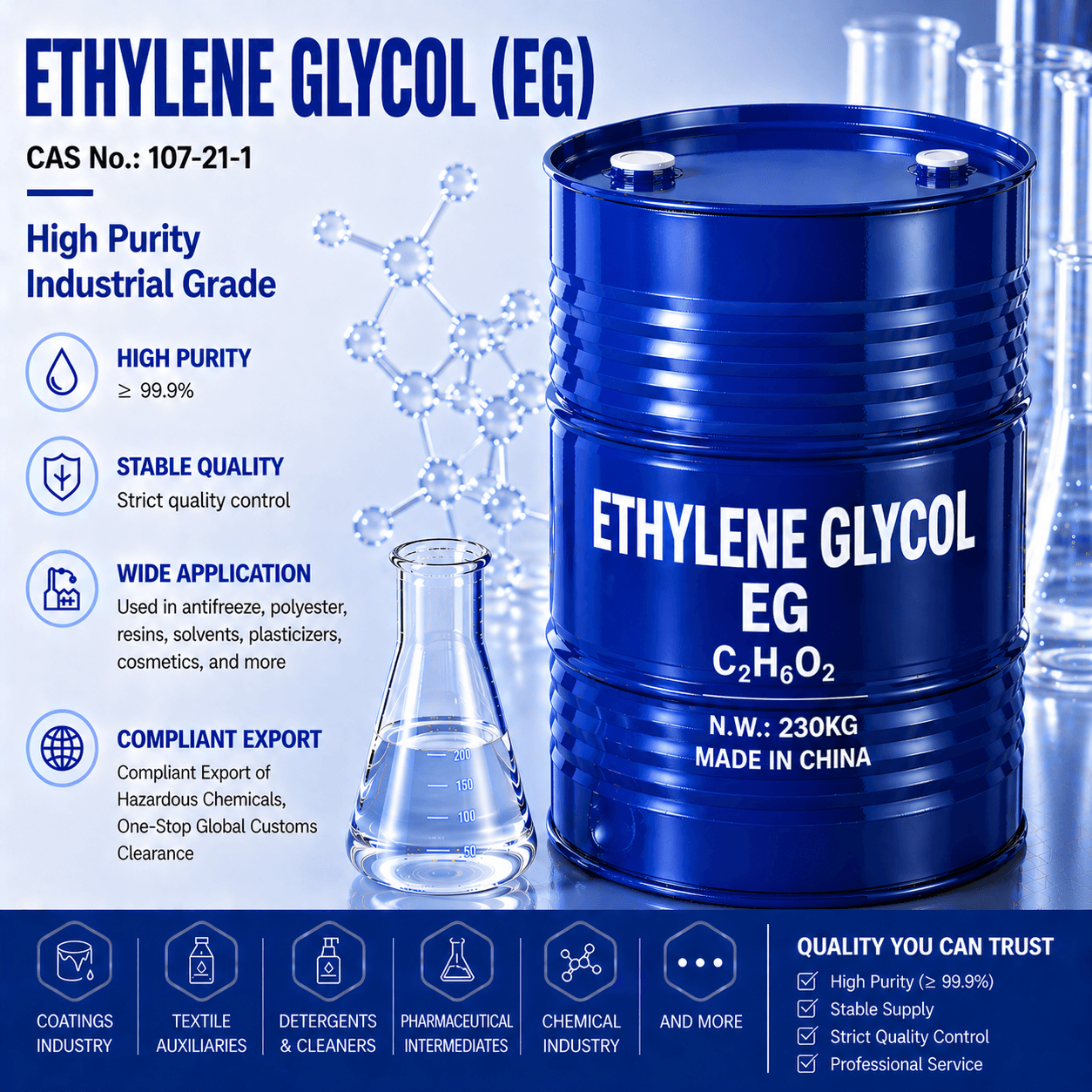
Ethylene glycol (EG) is a commonly used diol-based organic chemical raw material characterized by high hygroscopicity, a low freezing point, excellent solubility, and chemical stability. It is primarily used in the synthesis of polyester resins, automotive antifreeze, central air conditioning refrigerants, industrial solvents, humectants, additives for coatings and inks, and as an intermediate in organic synthesis.
For detailed information on the physical and chemical properties of EG, see 【Addition information】
Main Applications
1. Antifreeze and Refrigerants
• A key raw material in formulations for automotive antifreeze, industrial cooling water, and central air conditioning antifreeze and corrosion inhibitors.
2.Polyester Industry
• Used in the production of polyester fibers, PET polyester chips, bottle-grade chips, and resin raw materials—core raw materials for the synthetic fiber industry.
3. Coatings and Inks Industry
• Used as solvents for water-based coatings and inks, film-forming aids, and antifreeze and moisture-retaining agents.
4.Personal Care and Textiles
• Used as moisturizers, lubricants, textile auxiliaries, softeners, and hygroscopes.
5.Fine Chemicals Synthesis
Serves as an intermediate in the production of ethanolamines, ethers, esters, resins, adhesives, and other products.
6.Other Applications
• Leather auxiliaries, glass cleaners, construction antifreeze agents, and auxiliary materials for military and pharmaceutical intermediates.
GHS Hazard Classification
| Category | Information |
| Acute toxicity—oral | Category 4 |
| Acute toxicity—inhalation (aerosol) | Category 4 |
| Skin corrosion/irritation | Category 2 |
| Serious eye injury/eye irritation | Category 2B |
| Specific target organ toxicity—single exposure | Category 1 |
| Organ-specific toxicity—repeated exposure | Category 2/1 |
| Reproductive toxicity | Category 1B |
| Germline mutagenicity | Category 1B |
| Harm to the aquatic environment—long-term harm | Category 3 |
| Hazard statement | Warning |
Hazard Statement
H302: Harmful if swallowed
H315: Causes skin irritation
H319: Causes serious eye irritation
H332: Harmful if inhaled
H340: May cause genetic defects
H360: May damage fertility or the unborn child
H370: Causes damage to organs
H372: Long-term or repeated exposure may cause damage to organs
H373: Long-term or repeated exposure may cause damage to organs
H412: Harmful to aquatic life with long-lasting effects
Shipping Information
| Category | Information |
| UN Number | 3082 |
| Proper Shipping Name | Ethylene Glycol, EG |
| Hazard Class | Class 9 (Miscellaneous) |
| Packaging Group | III |
| HS Code | 2922.13 |
Packaging Specifications
| Packaging Type | Specification |
| Galvanized steel drum | 230 kg |
| IBC Tote | 1100 kg / IBC |
| ISO Tank | 20 MT |
| Small Package | customizable |
Storage Requirements
• Temperature: 5°C – 30°C (store at room temperature)
• Humidity: Avoid high humidity to prevent moisture absorption
• Environment: Store in a cool, dry, and well-ventilated indoor environment
• Container Sealing: Keep the container tightly sealed to prevent moisture from entering
• Keep Away From: Strong oxidizing agents, strong acids, and alkali metals
• Firefighting Equipment: Provide appropriate types and quantities of firefighting equipment
• Spill Response: Absorb with inert materials such as sand or vermiculite
Safety Precaution
• Engineering Controls: Provide good natural ventilation or local exhaust ventilation.
• Respiratory Protection: Wear a half-face respirator with filter for organic vapors.
• Eye Protection: Wear chemical safety goggles.
• Body Protection: Wear standard work protective clothing.
•Hand Protection: Wear chemical-resistant gloves.
Disclaimer
This product information is for reference only and does not constitute any warranty, guarantee, or legal advice. Before using DMF, users must:
- Carefully read and follow the latest SDS provided with the product;
- Conduct a risk assessment according to actual use and local regulations;
- Implement appropriate safety measures and comply with all applicable hazardous chemical regulations.
We assume no liability for any direct or indirect loss, damage, or injury arising from the use or handling of this product. Users bear full responsibility and risk for its use.