Product Description
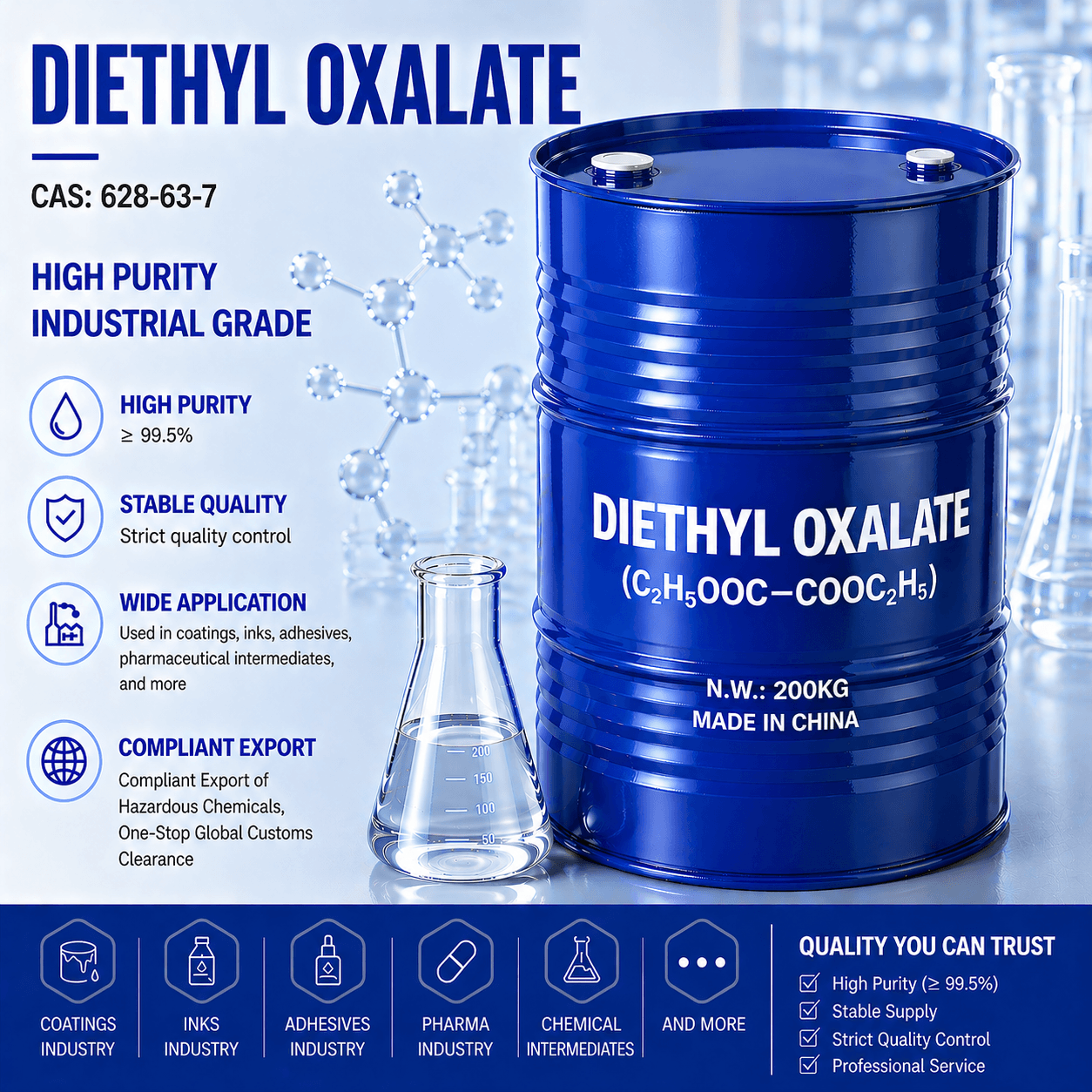
Diethyl oxalate, also known as ethanedioic acid diethyl ester or ethyl oxalate, is an important organic compound and industrial solvent. At room temperature, it appears as a colorless to pale yellow transparent oily liquid with a mild aromatic odor. It is miscible with ethanol, ether, ethyl acetate and most organic solvents, but only slightly soluble in water (approximately 1g/100mL).
Diethyl oxalate exhibits typical chemical properties of ester compounds. It absorbs moisture from air and hydrolyzes slowly. Upon heating, it can react with ammonia to form amide compounds and condense with acetone to form ethyl pyruvate. Under appropriate catalyst conditions, it can undergo transesterification reactions to produce other oxalate esters.
For detailed information on the physical and chemical properties of Diethyl oxalate, see 【Addition information】
Main Applications
1.Pharmaceutical Industry
It is a key intermediate in the synthesis of various drugs, including phenobarbital, azathioprine, sulfadoxine, carbenicillin, amoxicillin, hydroxychloroquine, tiabendazole, sulfamethoxazole (SMZ), and others.
2. Organic Synthesis
• Used as a feedstock in ester exchange reactions; reacts with phenol to form diphenyl oxalate
• Participates in the Claisen condensation reaction to synthesize acetaldehyde derivatives of ketosteroids
• Hydrogenation can be used to prepare ethylene glycol
3.Plastics & Additives
Used as raw material for plastic accelerators, textile auxiliaries, and dye-sensitized battery additives.
4.Dyes & Pigments
As dye intermediate for synthesis of paints, coatings, and printing dyes.
5. Other Applications
• Solvent for cellulose and fragrances
• Metal surface treatment, forming protective oxalate layers on carbonate substrates
• Replacement for oxalic acid in wood pulp papermaking industry
• Preparation of oxalic acid and diethyl carbonate through hydrolysis and decarboxylation
• Microemulsion synthesis of ZnO nanoparticles
GHS Hazard Classification
| Category | Information |
| Serious eye damage | Category 1 |
| Skin corrosion | Category 1B |
| Specific target organ toxicity—repeated exposure—oral | Category 2 |
| Acute toxicity—oral | Category 4 |
| GHS Pictograms | GHS05 (Corrosion) / GHS07 (Irritation) / GHS08 (Health hazards) |
| Hazard statement | Danger |
Hazard Statement
H227: Flammable liquid
H302: Harmful if swallowed
H314:Causes severe skin burns and eye damage
H373: May cause damage to organs (kidneys) through oral exposure
Shipping Information
| Category | Information |
| UN Number | UN 2525 |
| Proper Shipping Name | Diethyl Oxalate |
| Hazard Class | 6.1 (Toxic substances) |
| Packaging Group | III ( Medium Hazard) |
| HS Code | 2917.11 |
Packaging Specifications
| Packaging Type | Specification |
| Retail Packaging | 25 mL, 100 mL, 500 mL, 1 L (glass bottle) |
| Industrial Packaging | 25 L, 200 L (plastic drums/steel drums) |
| Bulk Supply | Tank Trucks (Customizable) |
| Minimum Order Quantity (MOQ) | 1 kg / 25 kg (depending on specifications) |
Storage Requirements
• Store in a cool, dry, well-ventilated area away from heat and ignition sources
• Keep containers tightly closed to prevent moisture absorption and light exposure
• Keep containers tightly closed
• Store separately from oxidizing agents and food additives
• Storage temperature recommended not to exceed 30°C (86°F)
• Shelf life: At least 12–24 months when unopened
• Stability: Sensitive to moisture; prone to slow hydrolysis. Once opened, use as soon as possible or reseal the container.
Safety Precautions
• Keep away from heat, sparks, open flames
• Store in well-ventilated area
• Keep container tightly closed
• Wear protective gloves and eye protection
• Avoid skin contact and inhalation
• Store away from strong oxidizers
Disclaimer
This product information is for reference only and does not constitute any warranty, guarantee, or legal advice. Before using DMF, users must:
- Carefully read and follow the latest SDS provided with the product;
- Conduct a risk assessment according to actual use and local regulations;
- Implement appropriate safety measures and comply with all applicable hazardous chemical regulations.
We assume no liability for any direct or indirect loss, damage, or injury arising from the use or handling of this product. Users bear full responsibility and risk for its use.