
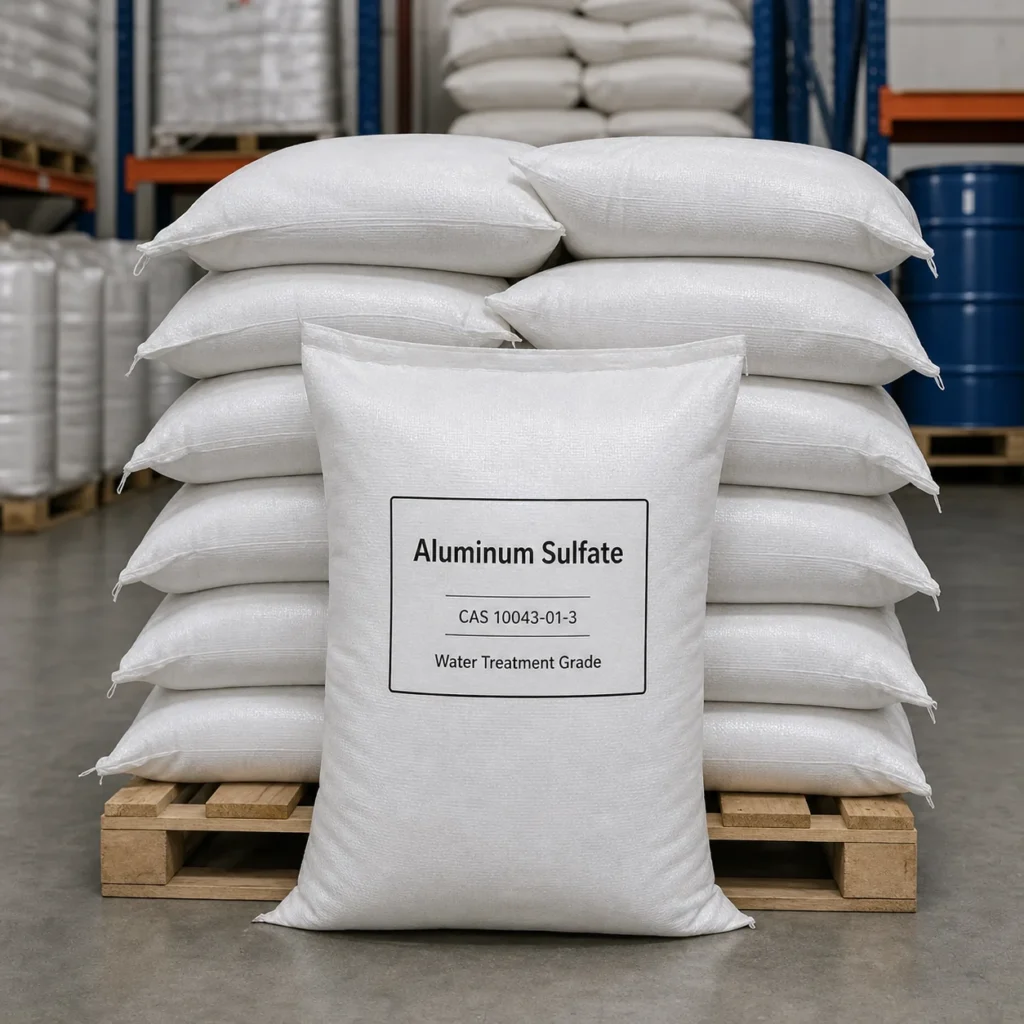
Aluminum Sulfate Supplier China CAS 10043-01-3 is commonly researched in connection with uses in industrial applications. This article gives a practical overview for technical teams, formulators and sourcing staff who need to understand where the material fits, which quality points matter and what information should be checked before industrial use.
Product page: View Aluminum Sulfate Supplier China specifications, packaging and quotation details.
Quick Answer
Aluminum Sulfate Supplier China CAS 10043-01-3 should be evaluated by application fit, grade, purity, appearance, key impurity indicators, packaging and document availability. The practical starting point is to connect the chemical name with the real process: what it does, where it is used and which batch details must be confirmed before purchase or testing.
Aluminum Sulfate, CAS 10043-01-3, is supplied by Xinchen for global B2B chemical buyers with batch COA, SDS, packaging review and export document support. ParameterInformationChemical NameAluminum SulfateAliasAlum / Aluminium SulphateCAS No.10043-01-3EC No.233-135-0Molecular FormulaAl2(SO4)3Molecular Weight342.15 g/molTypical PurityIndustrial grade / water treatment gradeAppearanceWhite granule, powder, flake or lump depending on gradeProduct TypeInorganic aluminum salt for water treatment and industrial useSupply DocumentsSDS, COA, TDS and export-related documents according to batch and destination requirements
Common Industrial Uses
This product is commonly considered in water treatment, pH adjustment, process treatment or inorganic chemical applications where concentration, insoluble matter and application dosage must be checked.
- Industrial water treatment, wastewater treatment or process-water conditioning.
- Paper, textile, construction, inorganic salt or general industrial processing applications.
- Plant operations where packaging, dosing convenience and stable supply matter.
- Export orders requiring consistent documentation and clear batch identification.
Practical Selection Notes for Aluminum Sulfate Supplier China
For treatment chemicals, practical selection often depends on concentration, insoluble matter, dosage method, storage tank compatibility, application pH, process water condition and whether the supplied form fits the buyer's dosing equipment.
When comparing suppliers or grades, the useful question is not only whether the chemical name matches. The better question is whether the offered batch, packaging and documents match the process where the material will actually be used.
How Aluminum Sulfate Supplier China Fits Into Industrial Workflows
Aluminum Sulfate Supplier China is usually selected according to the target process rather than the product name alone. Buyers should consider whether the material will be used in formulation, synthesis, extraction, cleaning, treatment or intermediate production, because each use case can require different specification priorities.
Application Questions Buyers Should Ask
Useful application questions include the target process, expected purity range, moisture sensitivity, residue limits, storage conditions, downstream compatibility and whether trial-batch testing is required before regular procurement.
Product Snapshot
| Product | Aluminum Sulfate Supplier China |
|---|---|
| CAS No. | 10043-01-3 |
| Category | Specialty Chemicals |
| Typical Focus | Concentration, insoluble matter, metal impurities, solution clarity and application compatibility. |
| Supplier Support | SDS, COA, TDS, packaging review, batch confirmation and export document coordination according to product and destination requirements. |
Specification Checks
Before confirming an order, buyers should review the exact product name, CAS number, current batch purity, appearance, moisture or acidity indicators where applicable, packaging format, storage conditions and target application. For products used in coatings, electronics, pharmaceuticals, resins, water treatment or synthesis, small specification differences can affect process stability, residue, reaction behavior, odor, color or downstream compatibility.
A practical purchase request should include intended use, required purity, annual or trial quantity, destination port, preferred packaging and whether SDS, COA, TDS, MSDS, hazardous packaging certificate or other export documents are required.
Turning the Application Into a Technical Requirement
A useful specification starts with the process rather than a copied purity number. For Aluminum Sulfate Supplier China (CAS 10043-01-3), the buyer should document the function of the material, the point where it enters production, contact time, operating conditions, acceptable residue or color, and the consequence of an out-of-specification batch. This converts a broad inquiry into measurable acceptance criteria and helps the supplier recommend a relevant grade instead of assuming that one industrial grade fits every use.
The first review should separate mandatory limits from preferences. Mandatory limits protect safety, reaction control or final-product performance. Preferences may improve handling or consistency but can increase cost without changing the result. Technical, purchasing and receiving teams should agree on these priorities before comparing quotations.
How to Review the COA and Supplier Specification
The certificate of analysis should be read together with the supplier specification. Confirm the analytical method, units, reporting basis and whether a result is an actual batch value or only a specification limit. The headline assay is important, but it does not describe the entire impurity profile. Depending on the process, water, acidity or alkalinity, color, non-volatile residue, inhibitor, metals or named organic impurities may deserve equal attention.
Questions for the technical review
- Which parameters directly affect concentration, insoluble matter, metal impurities, solution clarity and application compatibility.?
- Are the test methods comparable with the buyer’s incoming inspection methods?
- Does the COA report actual values for the critical parameters?
- Are sampling, retention-sample and claim procedures defined?
- Is a pre-shipment sample or trial batch needed before routine supply?
Application Fit and Important Boundaries
For treatment chemicals, practical selection often depends on concentration, insoluble matter, dosage method, storage tank compatibility, application pH, process water condition and whether the supplied form fits the buyer's dosing equipment. A published application example should be treated as a screening indication, not as a formulation guarantee. Suitability can change with concentration, temperature, other raw materials, equipment materials and downstream specifications. The buyer remains responsible for laboratory or plant qualification under the actual conditions of use.
When a different grade may be necessary
A more tightly controlled grade may be justified when the process is moisture-sensitive, color-critical, residue-sensitive or dependent on a narrow impurity range. A general industrial grade may be appropriate where those parameters are not critical. The decision should be supported by test data and process risk, rather than by purity language alone.
Packaging, Storage and Receiving Controls
Packaging should be selected for chemical compatibility, shipment size, contamination control and the receiving site’s unloading equipment. The quotation should state package material, net weight, closure or seal arrangement and palletization where applicable. Storage temperature, segregation, ventilation, moisture protection and inventory rotation must follow the current SDS and applicable local rules.
Receiving inspection checklist
- Match the product name, CAS number, batch number and package count with the order.
- Inspect labels, closures, seals and containers for damage or leakage.
- Confirm that the COA and SDS correspond to the delivered product and batch.
- Apply the agreed sampling method before releasing material to production.
- Record storage location and retest or shelf-life information where applicable.
Procurement Decision Record
Before approval, retain the agreed specification, representative COA, current SDS, sample or trial result, packaging confirmation, label requirements and logistics assumptions. Record who approved technical suitability and which parameters require incoming inspection. This decision record makes repeat orders more consistent and helps teams investigate any later variation without relying on memory or sales descriptions.
Handling and Document Notes
Water-treatment chemicals should be selected according to process conditions, dosage method, storage tank compatibility, local water chemistry and the buyer's operating procedure.
Storage, ventilation, personal protection, incompatibilities and transport requirements should always be checked against the latest SDS for the exact batch. Xinchen can coordinate SDS or MSDS, COA, TDS and export-related documents based on the product and batch. For hazardous or sensitive cargo, packaging, UN number, hazard class, carrier acceptance and destination-country requirements should be reviewed before shipment planning.
Common Questions
What is Aluminum Sulfate Supplier China used for?
This product is commonly considered in water treatment, pH adjustment, process treatment or inorganic chemical applications where concentration, insoluble matter and application dosage must be checked. Common uses should always be checked against the exact grade and target process.
Which quality factors are important?
The important factors depend on the application, but typical review points include concentration, insoluble matter, metal impurities, solution clarity and application compatibility. Current batch COA and SDS information help confirm whether the grade is suitable.
How should the product be evaluated before use?
Review CAS number, grade, purity, appearance, packaging, storage condition, document availability and process compatibility. For sensitive applications, sample testing or batch comparison may be appropriate before regular use.
How to Request a Faster Quotation
For a faster response, send product name, CAS number, required purity, estimated quantity, delivery destination, target application, packaging preference and required documents. If the product is used in a formulation or reaction system, sharing the key quality indicators helps confirm whether the offered grade is suitable.
Authoritative Verification Resources
Use authoritative databases to verify chemical identity, hazard information and transport context. Database summaries support preliminary review but do not replace the current supplier SDS, batch COA, applicable regulations or a destination-specific transport assessment.
- PubChem search for CAS 10043-01-3 — identity, identifiers and referenced compound information.
- ECHA Information on Chemicals — European regulatory substance information.
- UNECE Dangerous Goods resources — international transport framework and model regulations.